
Local SEO Las Vegas: A Service Business Buyer Guide
Plan local SEO in Las Vegas around accurate business information, useful service pages, qualified inquiries and dependable follow-up.
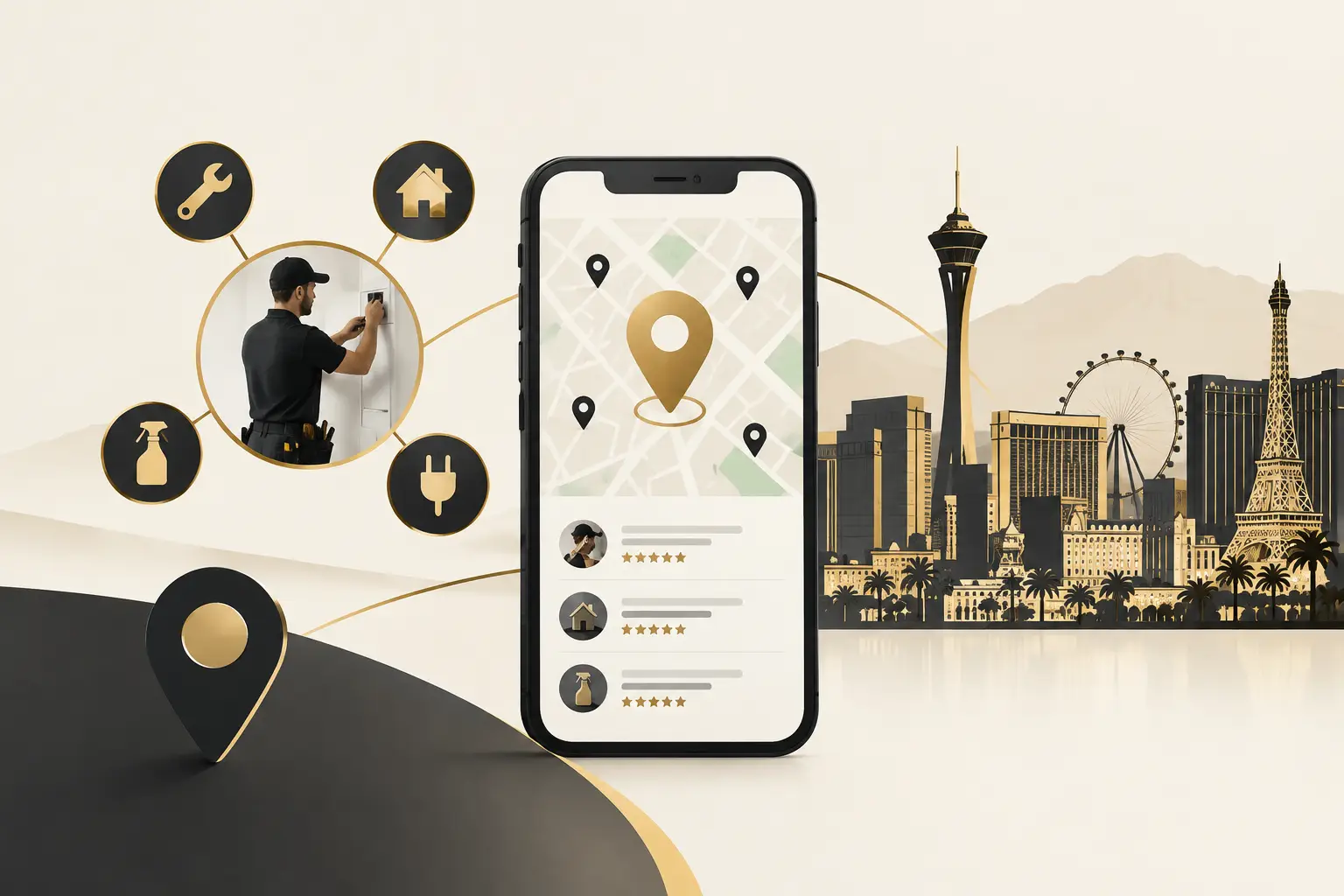
A Las Vegas service business can appear in local search and still lose the job before anyone speaks to a prospect. The issue is often not visibility alone. Local SEO in Las Vegas works best when search presence, a conversion-focused website, call handling, and follow-up all support the same customer journey.
For owners and operators, the practical goal is not more anonymous traffic. It is more qualified inquiries from people who can become appointments, estimates, consultations, and customers. That requires a local search program connected to the way your business actually sells.
What local SEO should accomplish
Local SEO helps eligible businesses become easier to find when people search for a nearby service, a specific problem, or a provider they can trust. In Las Vegas and Southern Nevada, that may include searches for a category, a neighborhood, an urgent need, or a company name after a referral.
The work usually centers on your Google Business Profile, your website, business information published across relevant directories, customer reviews, and local relevance signals. Search engines use these signals to understand what you do, where you serve, and whether your business is a credible result for a particular search.
But local visibility is only the first handoff. A person who taps to call after business hours, submits a form with no confirmation, or reaches a generic page with no clear next step may choose another provider. Local SEO has a lower business value when the inquiry process is disconnected.
A better standard is simple: can a prospective customer find the business, understand the offer, contact the right team, receive a timely response, and move toward a decision? If any stage breaks, rankings alone will not fix it.
Start with the local search foundation
Confirm that the business information is accurate
Your Google Business Profile should reflect the business as customers experience it. That means the correct business name, primary category, service areas or address setup, phone number, hours, website destination, and description. These details sound basic, but conflicting information creates confusion for both customers and platforms.
Category selection deserves more care than it often receives. The primary category should closely describe the core service, while additional categories should be used only when they accurately represent meaningful services. Choosing every possible category can muddy the message rather than strengthen it.
Businesses that serve customers at their location have different setup considerations from businesses that travel to customers. A service-area business should not present a location customers cannot visit. The correct profile configuration depends on the operating model, not on a desire to appear in more places.
Build pages around real buying intent
A homepage cannot explain every service, location, qualification, and next step clearly. Strong local websites typically use focused pages for the services that matter most to the business and its customers. Each page should answer practical questions: what is included, who it fits, what affects scope, how the process works, and how to request help.
For Las Vegas businesses, local context should be useful rather than repetitive. Mentioning service areas, response conditions, or local operating realities can help when it improves a buyer’s understanding. Repeating city names across thin pages does not create a durable local strategy.
The page also needs to convert. Prominent phone and form options, clear service descriptions, trust information that can be verified, and a realistic next step matter. If an appointment is the desired action, make appointment scheduling easy to find. If jobs need qualification first, design the form and call flow to collect the information your team needs.
Treat reviews as an operating process
Reviews influence how prospects assess a local business before contacting it. They also provide useful feedback about the experience customers receive. The sustainable approach is to ask eligible customers at the right point in the journey, make the request easy, and respond thoughtfully.
Do not use incentives that conflict with platform policies or pressure customers for only positive feedback. A review process should be consistent, not selective. If your team completes jobs, sends invoices, or closes appointments in a CRM, that workflow can create an appropriate reminder for a review request.
Responses matter, especially when a customer raises a concern. A public reply is not the place to argue or disclose private details. Acknowledge the issue, communicate professionally, and move the resolution to an appropriate channel when necessary.
Connect visibility to lead handling
The common failure in local marketing is measuring only what happens before the inquiry. Search impressions, map views, calls, and form submissions are useful signals. They are not the final outcome.
A local search program should make it possible to see which inquiries came from organic search or a business profile, what happened after the inquiry, and whether the lead became a qualified opportunity. This does not require perfect attribution. It requires a dependable enough process to identify patterns and make better decisions.
For example, a phone call should be answered, routed, or returned quickly. A web form should create a record, notify the appropriate person, and receive a useful confirmation. A scheduling request should not sit in an inbox until the next business day if the business promises rapid service. The right workflow depends on your team size, hours, sales process, and the value of a typical customer.
The Montoya Group approaches this as a connected system: attract relevant demand, capture inquiries, route leads, follow up consistently, and measure what happens next. A website, local search strategy, CRM pipeline, scheduling process, or AI receptionist may each be appropriate components, but not every business needs every component at the same time.
Where local SEO investment usually goes wrong
Some businesses begin with a list of keywords and a goal to rank everywhere. That can create a large volume of content with little buyer value. A narrower plan focused on the services, markets, and customer questions that affect real revenue is usually easier to maintain and evaluate.
Others put all effort into the Google Business Profile while leaving the website outdated or difficult to use on a phone. The profile may earn attention, but the website still has to support the decision. In competitive categories, a clear, credible website can be the difference between a quick exit and a qualified inquiry.
Another problem is inconsistent follow-up. A marketing agency can improve visibility, but it cannot make an unreturned call become an appointment. Before increasing demand, establish ownership for new leads, response-time expectations, and a process for leads that do not book on the first interaction.
Finally, be wary of promises of guaranteed rankings, calls, or revenue. Local search results change based on location, competition, search intent, platform updates, and the business itself. A credible partner can explain the work, report the evidence, identify constraints, and improve the system over time. They should not treat a position in search results as a guaranteed business result.
A practical way to prioritize the work
Start by reviewing the path a local prospect takes from search to sale. Search for core services from a mobile device. Check whether your Google Business Profile is accurate, whether the website lands on a relevant page, how quickly a call or form is handled, and whether the inquiry is recorded in a way the business can track.
Then prioritize the largest point of friction. If prospects cannot find accurate business information, correct that first. If they find the business but leave weak service pages, improve the website. If calls and forms go unanswered, fix the operating workflow before spending aggressively to generate more demand.
Technical diagnostics can be useful during this review. Page speed, mobile usability, indexing, broken forms, and tracking setup deserve attention because they affect the customer experience and your ability to diagnose performance. They are not proof that a business will rank higher or grow faster.
When local SEO is a good fit
Local SEO is most valuable for businesses with a defined service area, a clear offer, and the capacity to respond to inquiries. It is especially useful when customers actively search for the service, compare nearby providers, or use maps to make a decision.
It may be a weaker first investment when the offer is unclear, service delivery is inconsistent, or the business has no process for handling demand. In those cases, improving the offer, website messaging, intake process, or follow-up may create a stronger base before expanding local search work.
The right next step is not to chase every local ranking. It is to identify the moments where qualified prospects are being lost, then build a system that gives them a clear reason and an easy way to become customers.
What affects local rankings?
Google describes local results in terms of relevance, distance and prominence. Complete business information helps Google understand your offer; it does not move your physical location closer to every searcher. Google’s local ranking guidance also makes clear that businesses cannot request or pay Google for a better local ranking.
Use this distinction when reviewing a proposal. Ask which service pages will improve relevance, which business details need correction, and how the provider will measure qualified inquiries. Adding a long list of service areas is not a promise of visibility in each one.
Questions to ask before starting local SEO
Should I create a page for every Las Vegas neighborhood?
Only when each page offers distinct, accurate information that helps a real buyer. Replacing city names in nearly identical copy adds little value. Start with your actual services and the locations you can reliably serve.
How should I judge the first reporting cycle?
Confirm that agreed fixes were completed, tracking works and inquiries reach the right team. Then compare relevant search visibility, qualified inquiries and outcomes over time. A ranking snapshot alone cannot establish a return on investment.
Review your local customer journey
The Montoya Group is based in Las Vegas and serves businesses across the United States. Start a local visibility conversation with your current website, Business Profile and priority services. We can help identify whether the first constraint is search visibility, the page visitors reach or the response process behind it.