How to Fix Missed Calls in a Service Business
Learn how to fix missed calls with faster response workflows, call routing, text follow-up, and clear ownership that turn inquiries into appointments.

To fix missed calls, define a primary answer route, a backup, a monitored callback queue and an owner for every unresolved inquiry. Add automated acknowledgments or AI reception only where they fit your callers, phone setup and agreed coverage.
That process does not require replacing every tool your team uses. It does require an honest look at where calls are lost: during busy hours, after hours, while staff are on job sites, or after a caller leaves a voicemail that no one owns. The right solution depends on your call volume, sales process, and the type of work you sell.
Start by finding where missed calls actually go
Many owners know calls are being missed but cannot say how often, when, or what happens afterward. Begin with a two-week review. Compare your phone records with booked appointments, form submissions, and CRM contacts. Look for unanswered calls, short calls, abandoned calls, and voicemails without a documented follow-up.
This review can reveal an operational issue, a coverage gap or a combination of both. A front-desk employee may be handling a customer in person. A sales rep may be driving between appointments. The owner may be the default person for every new inquiry. If the business has no defined backup, the customer is left waiting.
Pay attention to patterns. Are calls missed only after 5 p.m.? Do they cluster during lunch, on Mondays, or when the team is in the field? Are callers trying a tracking number from an ad, the main office line, or a staff member's mobile number? Each pattern points to a different repair.
Set a response standard your team can keep
"Call people back quickly" is not a system. Define what quick means for your business and who is responsible at each stage. For example, a live call might route to a backup team member after a short ring time. A voicemail or missed call could trigger an immediate acknowledgment by text, followed by a human call-back within a stated business-hour window.
The standard should fit the customer journey. A homeowner with an urgent repair need may expect an immediate answer. A professional-services prospect may be comfortable scheduling a consultation later that day, provided they receive a clear confirmation. A business that sells higher-consideration work may need the first response to qualify fit before a calendar invitation is offered.
Speed matters, but accuracy matters too. An automatic message that promises a time slot the team cannot honor creates a second failure. Build the response around what your staff can reliably deliver, then measure whether it happens.
Give every call a clear owner
A call can be answered, transferred, and still disappear. The central question is simple: who owns the next action?
Set ownership rules for live calls, missed calls, voicemails, and calls that need a technical or sales follow-up. If the first person cannot resolve the request, they should create or update a contact record, select the next stage, and assign the follow-up to a named person. A shared inbox without assignment is usually just a more organized place for work to be overlooked.
For smaller teams, ownership may rotate by day or by time block. For larger teams, it may follow territory, service line, or pipeline stage. What matters is that the caller is not dependent on one unavailable employee.
Use call routing that matches your operations
Call routing should reflect how your business works, not how the phone system was configured years ago. A basic approach may be enough: ring the primary line, then a backup user or group, then send unanswered calls to a monitored voicemail. Businesses with more complex coverage may need routing based on business hours, department, location, or the caller's selection.
Avoid menus that make a motivated caller work too hard. If most callers need the same thing, a long phone tree adds friction without improving service. Keep options limited and make the path to a person clear.
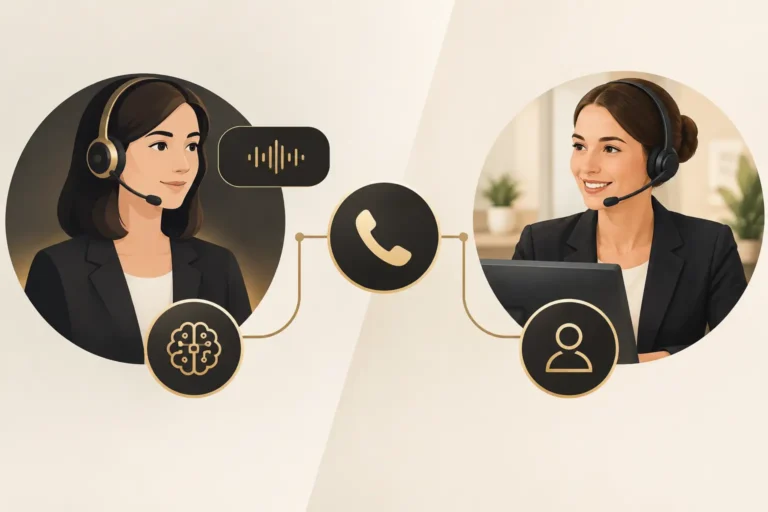
After-hours coverage deserves its own decision. Some businesses benefit from an AI receptionist that can answer common questions, capture details, qualify the inquiry, and offer appropriate next steps. Others should use a concise message that sets expectations and collects the information needed for a morning response. The trade-off is between availability and complexity. Automation is useful when it reliably hands off context; it is not useful when it traps callers in a confusing conversation.
Follow up by text without becoming impersonal
A missed-call text can prevent a promising inquiry from going cold. The best messages are short, identify the business, acknowledge the call, and offer an easy next action. They should not pretend a person is available when one is not.
For example: “Thanks for calling [Business Name]. We missed you and will call back shortly. If helpful, reply with your name and what you need assistance with.” For after-hours calls, the message can state the next business-hour response time and offer a scheduling option if that is genuinely available.
Text follow-up works best as part of a sequence, not as a substitute for responsibility. If the caller replies, the conversation should enter the same customer record as the original call. If they do not reply, the assigned team member should still complete the promised call-back attempt. The goal is to make follow-up consistent, not merely automated.
Connect calls to your pipeline and calendar
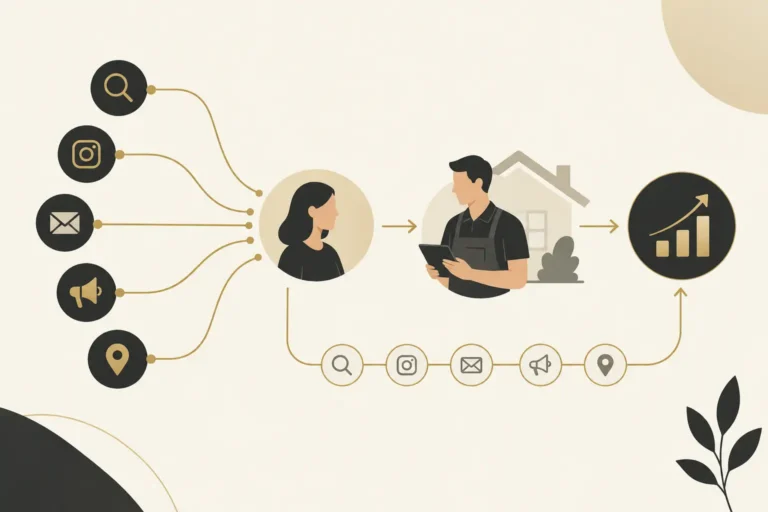
When calls live in one system, text messages in another, and appointments in a third, teams lose context. A connected workflow creates a contact when a call is missed or completed, records the source and disposition, and places the opportunity in the appropriate pipeline stage.
That allows the business to distinguish between a new lead, an existing customer needing support, a vendor, and an unqualified inquiry. It also gives managers a practical view of the work: how many missed calls became conversations, how many conversations became booked appointments, and where prospects stopped moving forward.
Scheduling should be connected to the same process. If a caller is ready to book, the team should not have to copy details into a separate calendar and hope nothing is missed. If an appointment is set, confirmations and reminders can reduce avoidable no-shows. Not every business needs the same pipeline design, but every business benefits when the handoff from phone call to next step is visible.
The Montoya Growth OS can support this kind of connected journey by bringing call capture, pipelines, follow-up workflows, scheduling, and reporting into a system your team can operate day to day. The correct setup depends on your existing phone provider, CRM requirements, team roles, and customer experience standards.
Measure the process, not just the number of calls
A lower missed-call count is useful, but it is not the whole story. A call that is answered quickly and handled poorly is not a win. Review a small set of operational measures each month: total inbound calls, answered and missed calls, call-back completion, response time, appointments booked, and lead outcomes by source.
Use those numbers to ask better questions. Is one campaign generating calls outside your coverage hours? Is a specific service line producing many calls but few qualified appointments? Are team members logging outcomes consistently? The answers can improve marketing decisions as well as phone coverage.
Do not treat call recordings or analytics as proof of sales performance on their own. They are diagnostics. A pattern may show that callers want different information, that the routing is unclear, or that your offer needs a better explanation before the appointment stage.
Common fixes that fail
Hiring another person can help, but it is not automatically the answer. Without routing, ownership, and follow-up rules, a new employee may simply inherit the same confusion. Likewise, forwarding every call to an owner's cell phone can feel responsive until that owner is in a meeting, on vacation, or unable to document what happened.
Another weak fix is relying on voicemail alone. Some customers will leave one, but many will not. A voicemail message should set expectations, while an automated missed-call acknowledgment gives callers confirmation that their attempt was noticed.
Finally, avoid measuring success only by how fast the first message goes out. A fast acknowledgment followed by no useful human response is still a missed opportunity. The process should end with a recorded outcome: booked, nurtured, disqualified, resolved, or closed.
A practical first step
Before buying a new phone platform or adding automation, map one missed call from start to finish. Identify what happens at the moment it is missed, who is notified, how the caller is contacted, where the conversation is recorded, and how a booked appointment is confirmed. Prioritize the gap that has a clear owner, material impact and a testable correction.
Customers do not experience your phone line, website, calendar, and CRM as separate systems. They experience whether your business responds when they are ready to talk. Make that response dependable, and your team has a better chance to earn the next conversation.
Test a missed-call workflow before you buy more coverage
Use a hypothetical local-service inquiry: a caller needs an estimate while the assigned coordinator is unavailable. The test passes when the inquiry reaches a monitored record, a fallback owner is assigned and the caller receives the response your business actually promised. Do not use a real prospect for a test.
| Test | Evidence to check |
|---|---|
| Primary person does not answer | Backup route or monitored voicemail receives the call |
| Call arrives after hours | Message states the actual response window |
| Caller replies to a text | Reply reaches a monitored conversation and assigned owner |
| Caller books or opts out | Conflicting follow-ups stop or change appropriately |
| The same person calls twice | Team can see the existing context without duplicate opportunities |
A sent text does not establish delivery, and a notification does not establish a completed callback. Review permissions, sender requirements and opt-out behavior against your provider's messaging policy before enabling automated messages.
Does the AI Receptionist package include every follow-up workflow?
No. Our AI Receptionist lists call answering, appointment scheduling and FAQ handling. Broader lead routing and CRM workflows require an agreed scope, such as the AI Automation Package.
Find the gap behind your missed calls
Talk through your call-handling process with The Montoya Group, a Las Vegas growth systems studio. Bring your phone setup, coverage hours and one example of a missed inquiry. We can help define a practical next step without assuming you need to replace every tool.
Illustrative artwork; not a live product interface, client result or staff photograph.